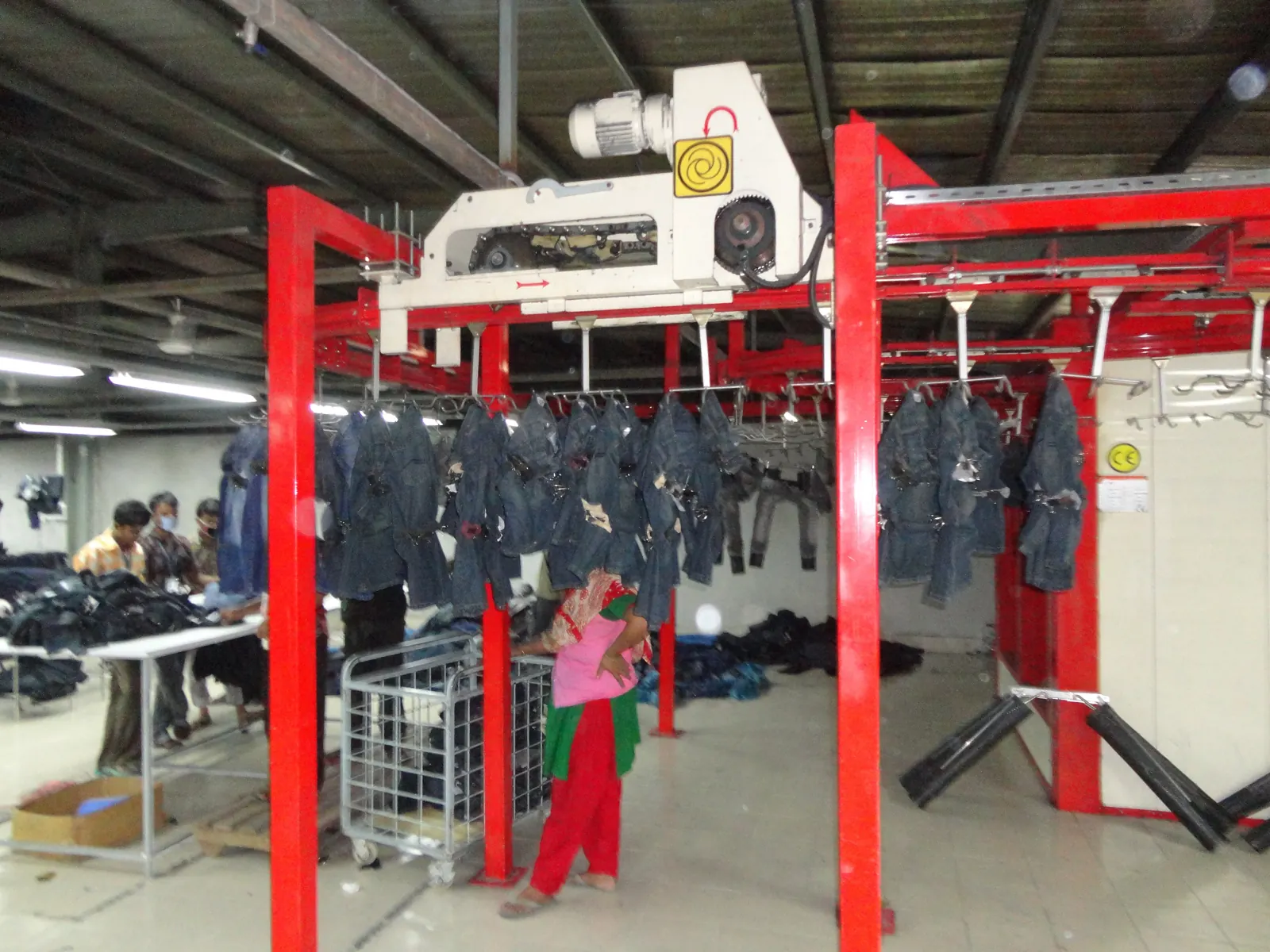
Machine Vision for Garment and Apparel Plants
Cerox Engineering designs and builds camera systems for Sri Lankan apparel manufacturers: shade segregation of washed garments and denim, automated fabric inspection, label, print and barcode verification, and camera measurement. Every roll and every piece is checked against one standard, with a record to show for it.
Machine vision in a garment plant at a glance
- Colour
- Shade segregation of rolls, panels, washed garments and denim, measured in CIELAB against your buyer standard.
- Defects
- Full-width fabric inspection with a defect map per roll, graded to the 4-point system (ASTM D5430).
- Identity
- Label, print and barcode verification on garments, hangtags, polybags and cartons.
- Records
- A measured result for every roll or piece, kept against lot, style and PO for QA and buyer queries.
Quality decisions that are still made by eye
In most apparel plants the decisions that protect a shipment are visual. An inspector watches fabric run over a lit table and marks defects. A shade approver compares washed garments with a standard in a light box. A packer checks that the label, the hangtag and the carton sticker all belong to the same style and size.
This is skilled work, but it is hard to keep consistent. Attention drops over a long shift, two people rarely agree exactly on a borderline piece, and there is no measured record to answer a buyer claim. Machine vision does not remove the people. It gives every roll and every piece the same look, applies the standard your team sets, and hands them the exceptions.
Six vision systems we design and build for apparel
Shade Segregation
Measures every roll, panel or washed garment in CIELAB under controlled light and sorts it into buyer shade bands or 555 codes.
Learn moreAutomated Fabric Inspection
Line-scan cameras on the inspection frame find holes, stains, slubs and dropped stitches, map each defect and grade the roll to the 4-point system.
Learn moreBarcode and Code Verification
Reads the barcode or 2D code on hangtags, price tickets and cartons, checks it against the order, and grades print quality.
Learn moreLabel and Print Inspection
Pattern matching confirms the right care label, size label, heat transfer or carton label is present, straight and legible.
Learn moreCamera Measurement
Non-contact checks of fabric width, cut panel shape and print or label placement against the specification.
Learn moreGarment Measurement and Stitch Inspection
A calibrated overhead camera measures every point of measure against the spec sheet, and close-up imaging finds skipped stitches, puckering and open seams.
Learn morePiece and Carton Counting
Counts garments and cut panels at packing and bundling against the order or bundle ticket, and saves a count and image per carton.
Learn morePPE and Safety Monitoring
AI on existing CCTV checks PPE in cutting rooms and boiler areas, watches forklift aisles in the warehouse, and spots smoke early on large open floors.
Learn moreVision Inspection Station
A camera and lighting station built around one check you need, with pass or fail on every unit and a saved image of each failure.
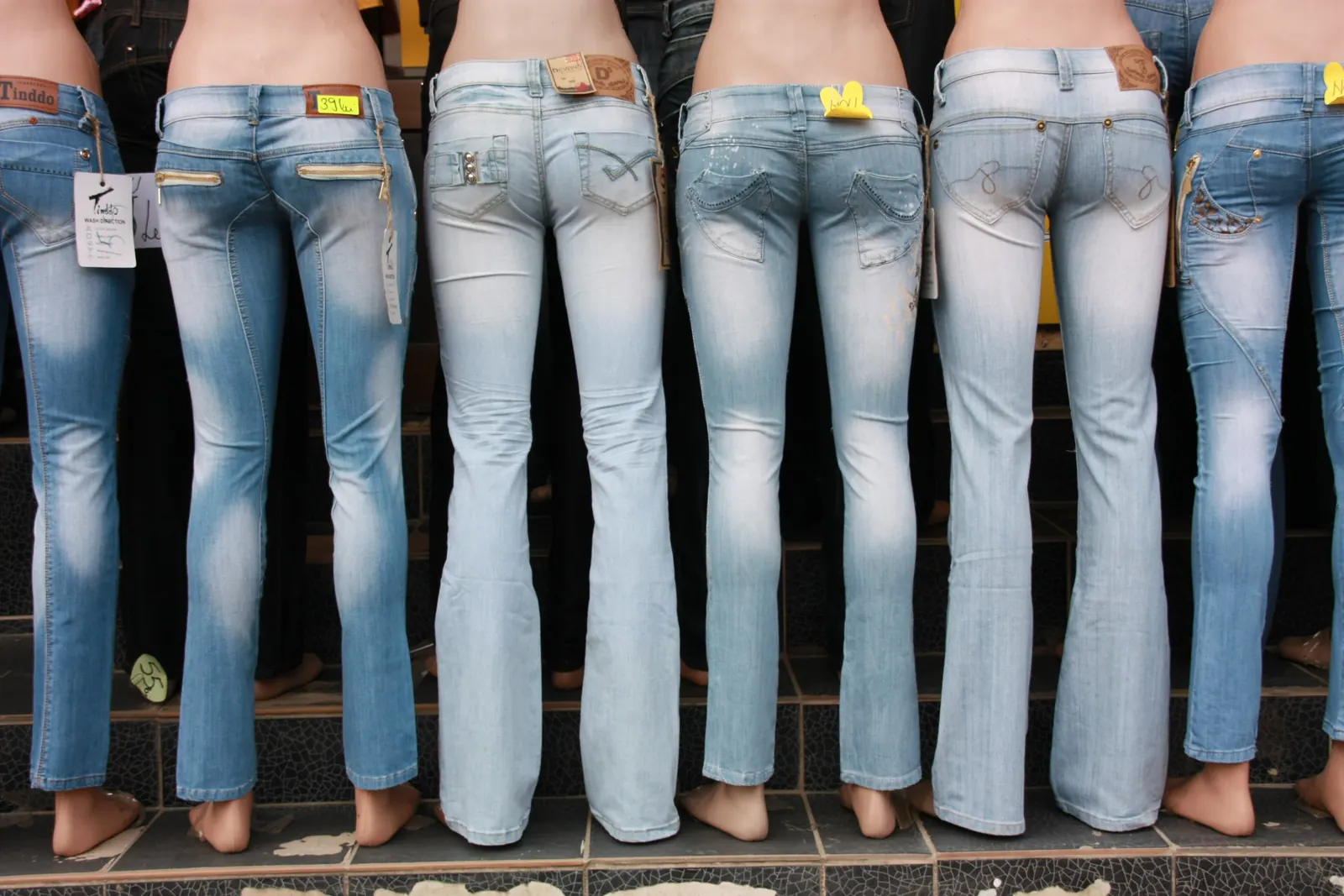
Learn moreWashed garments and denim, sorted by measured colour
Dye lots differ, a roll can change colour from side to centre and from head to tail, and washing amplifies small differences. Denim is the most visible case. A shade segregation station replaces the judgement call with a measurement:
- An enclosed cabinet blocks ambient light and lights each piece with standard illuminants, typically D65 daylight plus TL84 or A
- A calibrated colour camera or multispectral sensor measures defined zones, avoiding seams, labels, whiskers and pockets
- Colour difference from the approved standard is calculated with CMC 2:1 (ISO 105-J03) or CIEDE2000
- Each piece is assigned a buyer shade band or a three digit 555 code for lightness, red/green and yellow/blue
- A diverter, pick lane or printed label carries the result, and out of tolerance pieces go to a separate lane for your team to decide
- Every measurement is logged against lot, style and PO, with drift alerts back to dyeing or washing
Every roll graded to the 4-point system, with a defect map
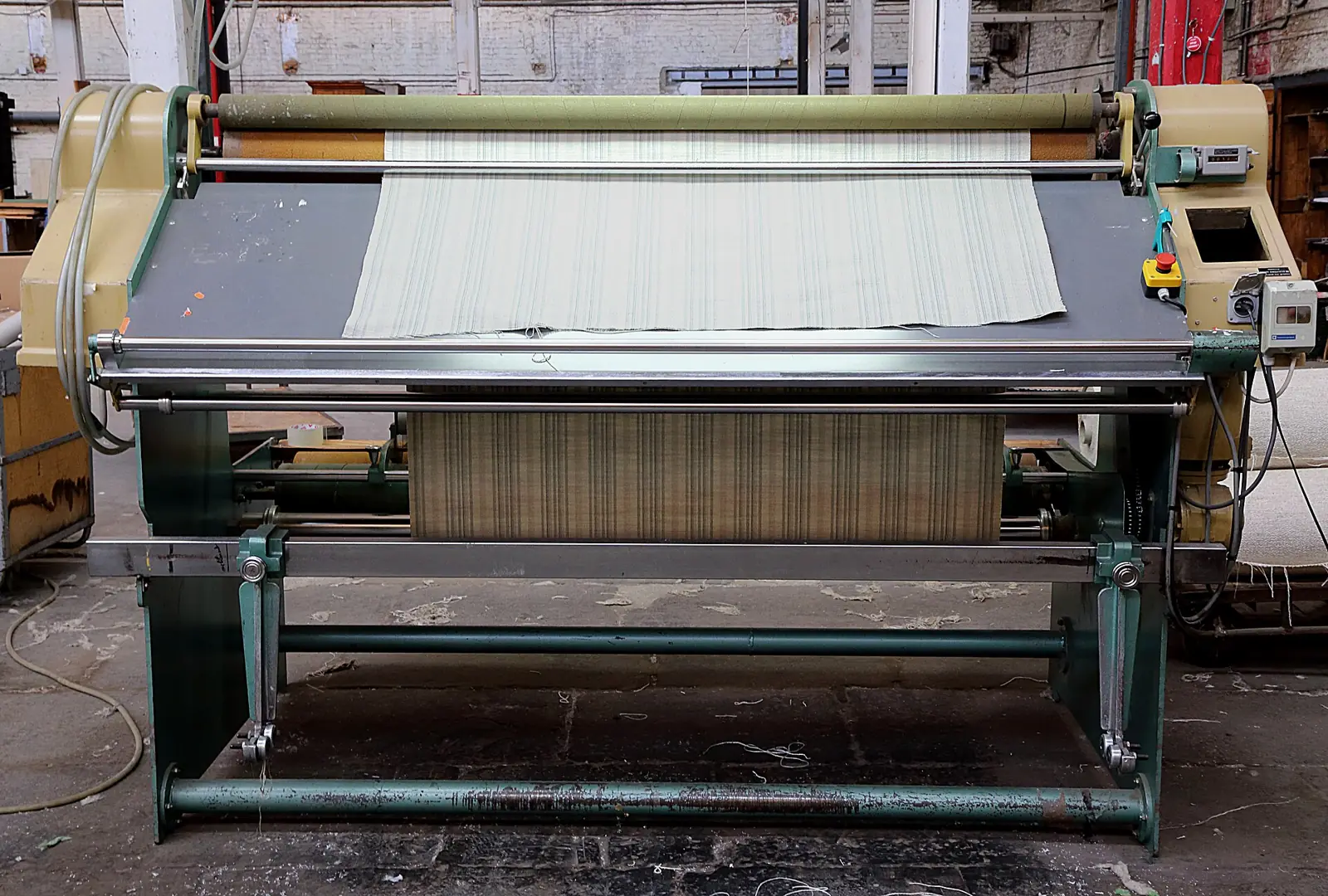
Fabric inspection is the gate every roll passes before it is cut. A defect found there costs far less than one found after sewing. Putting cameras on the frame makes that gate consistent:
- Line-scan cameras image the full width, synchronised to fabric speed by an encoder
- Reflected light shows stains, oil spots and print faults, and transmitted light from below shows holes, thin places and weave faults
- Software classifies each defect, and deep learning handles patterned and textured fabrics
- Each defect is scored by length under the 4-point system (ASTM D5430) or your buyer rules, and the roll is graded as it finishes
- The operator confirms flagged defects on screen
- A defect map, a printed roll ticket and defect images are saved for claims and supplier feedback
The right label, the right print, a code that scans
A wrong size label or a carton barcode that does not scan is a small fault with a large consequence. These checks suit a camera well, because the correct answer is already known from the order.
Labels
Care labels, size labels, main labels and heat transfers are compared with the approved artwork for the style, so a label from the wrong style or size is caught at the point it is attached or packed.
Prints and embroidery
Pattern matching checks that the right print or embroidery is present, complete and placed where the specification says, measured from a seam or edge.
Barcodes and tickets
Readers decode EAN/UPC, Code 128, GS1-128, QR and Data Matrix codes on hangtags, price tickets, polybag stickers and carton labels, and compare the content with the order data for style, size and colour.
Measurement
Fabric width is measured continuously on the inspection frame. Cut panels are compared with the pattern outline. Finished garments can be checked on a flat table where presentation is consistent.
Barcode print quality can be graded to ISO/IEC 15416 for linear codes and ISO/IEC 15415 for 2D codes. Every read is saved against the order, so a query about a carton can be answered from the record.
Four places in a garment plant where a camera earns its place
The earlier a fault is caught, the less it costs. Most plants start at the point that hurts most today and add the others later.
Fabric store and goods-in
- Automated fabric inspection of incoming rolls, with a 4-point grade and defect map per roll
- Roll shade measured at start, middle and end, and side, centre, side, to catch listing and ending
- 555 code and grade printed on the roll ticket, rolls grouped by shade before issue
Cutting room
- Lay planning from roll shade groups, so one lay is one shade
- Panel shade matching per bundle, so a front never mismatches its back or sleeves
- Cut panel outline checked against the pattern, and shade group written to the bundle ticket
Laundry and finishing
- Shade banding of washed garments and denim after drying and cooling
- Lot report per wash batch, with shade drift alerts back to the wash floor
- Label, print and trim presence checks on the finished garment
Packing
- One shade band per carton, with the band on the carton label
- Hangtag, price ticket and polybag barcode checked against style, size and colour
- Carton label read and graded before the carton leaves the line
Tested on your own fabric and garments first
Every fabric, wash and label behaves differently under a camera, so a vision project starts with evidence from your own material:
- You share samples: rolls with known defects, garments already graded by shade, or labels and cartons from a current order
- We run a feasibility study on those samples and show how the results compare with the decisions of your own team
- We scope a pilot station for one frame or one line, running beside your inspectors
- Lighting and optics are tested before the station design is fixed
- Results can be exported to your ERP, WMS or quality records
Cameras, lenses and lighting are also available from our machine vision hardware catalogue, and the full list of applications is on the machine vision page.
Send us a few rolls or graded garments
Tell us where a visual decision slows your plant down, and share samples your team has already graded. We will show you what a camera makes of them.
Common questions
What can machine vision do in a garment plant?+
Four jobs cover most of it. Shade segregation measures the colour of rolls, panels and washed garments and groups them into shade bands. Automated fabric inspection finds and maps defects in every roll and grades it to the 4-point system. Label, print and barcode verification confirms the right label and a readable, correct code on every piece or carton. Camera measurement checks fabric width, panel shape and print placement against the specification.
Why do washed garments and denim need shade segregation?+
Indigo varies from roll to roll and across the width of a roll, and washing processes such as enzyme, stone, bleach and ozone washes amplify that variation. Garments from one lot can come out visibly different. Buyers expect each carton and each order to be one consistent shade, so washed garments are sorted into shade bands before packing. A vision station measures each piece in CIELAB under controlled light and assigns a buyer shade band or a 555 code.
What is the 4-point system in fabric inspection?+
The 4-point system, standardised as ASTM D5430, assigns penalty points to each defect by its length: up to 3 inches is 1 point, over 3 and up to 6 inches is 2, over 6 and up to 9 inches is 3, and over 9 inches or any hole is 4. Points are totalled per roll and normalised per 100 square yards, and the buyer sets the acceptance limit. An automated system applies the same scoring to every defect it logs and prints the result on the roll ticket.
Can cameras be added to our existing inspection frames and overhead lines?+
Usually, yes. Most fabric inspection frames can take a camera bar, lighting and an encoder, and a shade measurement cabinet can sit on an existing overhead garment line or a belt. We check the frame, fabric widths, speeds and available space before recommending a retrofit or a new station.
Can a camera verify labels, prints and barcodes on garments and cartons?+
Yes. Pattern matching compares a care label, size label, heat transfer or print with the approved artwork for the style. Barcode readers decode the code on a hangtag, price ticket or carton label and check its content against the order data for style, size and colour. Print quality of barcodes can be graded to ISO/IEC 15416 for linear codes and ISO/IEC 15415 for 2D codes.
Can vision measure garments?+
Vision measures flat, well presented items reliably: fabric width on the inspection frame, cut panels against the pattern outline, and the position of a print, label or embroidery relative to a seam or edge. Finished garment measurement is possible on a flat table with the garment laid out consistently, and the result depends on how it is laid. We confirm what is realistic on your own styles during a feasibility study.
Does machine vision replace our inspectors and shade approvers?+
It changes their job. The system looks at every metre or every piece and applies one standard. Inspectors confirm flagged defects on screen, and shade approvers set the standard and decide the exceptions. Human judgement stays on the decisions that matter.
How do we start a machine vision project with Cerox?+
Start with a conversation and samples: rolls with known defects, garments your team has already graded by shade, or labels and cartons from a current order. We run a feasibility study on your own material and then scope a pilot station for one line. A site visit, where one is needed, is chargeable based on location. Contact Cerox through the enquiry form at ceroxengineering.com/contact or at info@ceroxengineering.com.
Photographs show representative apparel plants and equipment, not Cerox installations or client sites. Photo credits, via Wikimedia Commons: Overhead garment line by Fahad Faisal, CC BY-SA 4.0; Jeans in different washes by Lion Hirth (Prissantenbär), CC BY-SA 3.0; Fabric inspection machine by Jamain, CC BY-SA 4.0.